
|
|
|
|
|
|
|
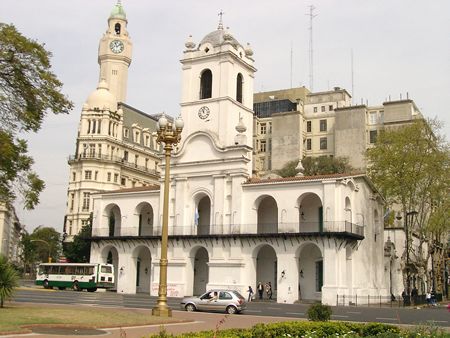
| The old 'Cabildo': the old Capitol (from 'Capitulum' or 'head' of the city --in Latin) |
 Description: Scroll (way) down for extensive information!
When: 3:30 pm daily Oct-May, rain or shine --Booking & calling ahead is advisable as walks may fill-up or be cancelled
Duration: approx. 3 hours (almost 4 hrs w/ 'La Boca' option)
Price: US$50 (US$75 p/p w/ 'La Boca' option)
Discounts: Each 6 people, one is free of charge (18% discount)
Meet: Corner of Florida & Paraguay Sts., outside the 'Florida Garden' cafe. Look for our guides, wearing 'BA-Walking-Tours' jackets, shirts or baseball caps. Get printable, bilingual ('help-me-get-there') directions here, or see map here.
Note: After this ultra-enjoyable walk you will understand Buenos Aires (and Argentina!!) much better. It includes over 25 main city landmarks (different from our other walks). This is not a strenuous walk. At some point in we'll stop for coffee or refreshments at some emblematic cafe of cultural or historical value. Snacks, drinks, hotel pickup, transportation, foot massage, mid-life-counseling, good sense of humour and gratuities are not included (actually massage, counseling and good sense of humour are not even available!).
Some key sights:
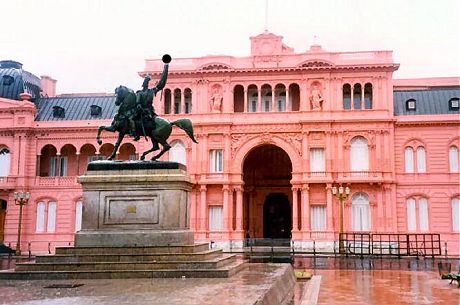 The Plaza de Mayo (Spanish: May Square) is the main historical square in downtown Buenos Aires, Argentina; it is flanked by Hip�lito Yrigoyen, Balcarce, Rivadavia and Bol�var streets. Several of the city's major landmarks are located around the Plaza: the Cabildo (the city council during the colonial era), the Casa Rosada (home of the executive branch of the federal government), the Metropolitan Cathedral of Buenos Aires, the current city hall or municipalidad, and the headquarters of the Naci�n (National) Bank.
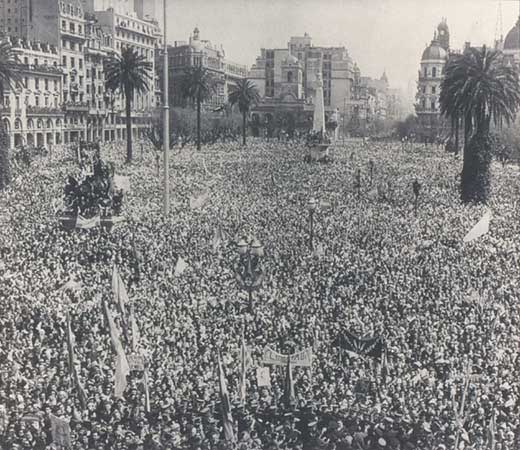
  On October 17, 1945, mass demonstrations in the Plaza de Mayo organised by the CGT (trade union federation) forced the release from prison of Juan Domingo Per�n, who would later become president of Argentina. For several years the Peronist movement gathered every October 17th in the Plaza de Mayo to show their support for their leader (and October 17 is still "Loyalty Day" for the traditional Peronists). Many other presidents, both democratic and military, have also saluted people in the Plaza from the balcony of the Casa Rosada.
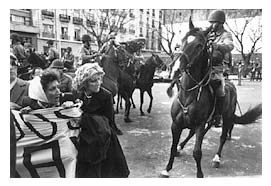
  Crowds gathered once again on April 2, 1982 to hail de facto President Leopoldo Galtieri for starting the Falklands/Malvinas war. Since the late 1970s, this is where the Mothers of the Plaza de Mayo have congregated with signs and pictures of desaparecidos, their children, who disappeared (murdered) by the Argentine military in the Dirty War, during the National Reorganization Process. The Argentine military was anti-Communist, and people perceived to be supportive of such ideas would be illegally detained, subject to abuse and torture, and finally murdered in secret.
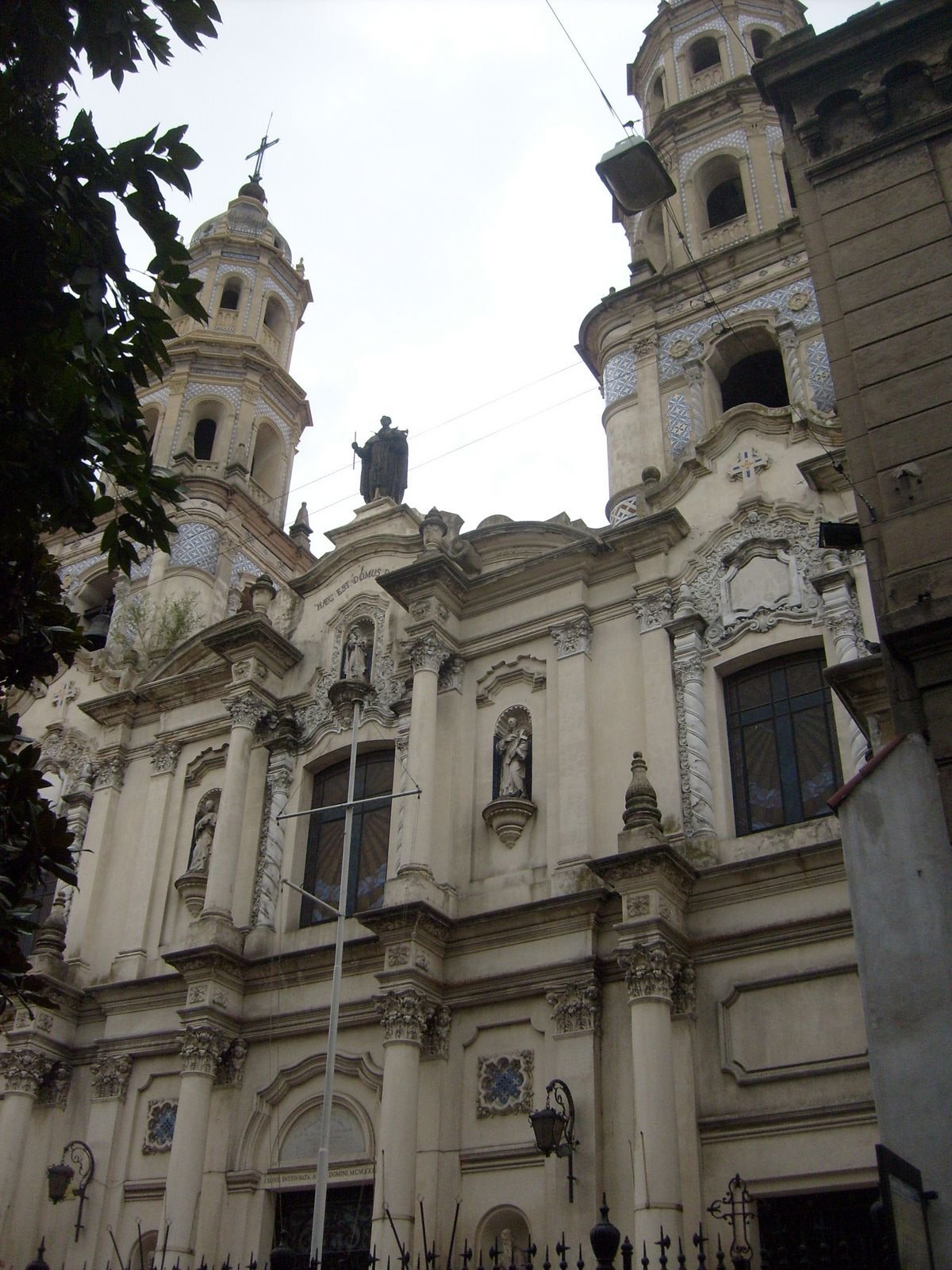
 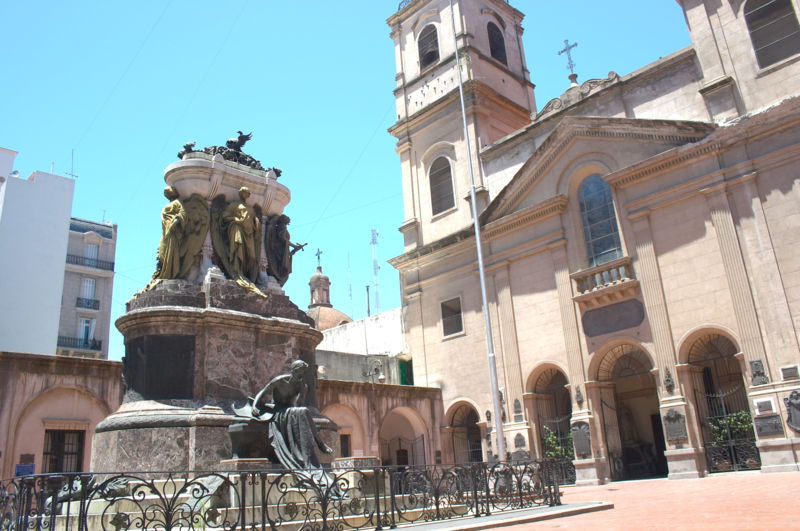 Next we visit the birthplace of the University of Buenos Aires (the 'Manzana de las Luces' or 'Enlightment Square') and we continue our walk visiting some of the most ancient buildings still standing in Buenos Aires. Later, as we start to walk towards the famous (and very old) San Telmo neighbourhood, we learn about the why & how of the early British invasions to Buenos Aires (1806 & 1807) and we walk to the Basilica of Santo Domingo, where the British where finally cornered (you can still see cannonballs incrusted in the towers). Completed in 1783, this church housed the Natural History Museum and astronomic observatory under President Rivadavia. In 1835, the dictator Juan Manuel de Rosas repatriated the Dominicans friars and in 1856 the second tower was built. An atrium houses the Mausoleum of Gral. Manuel Belgrano (the creator of the Argentine flag, who was born and died near the church). This work by Hector Ximenez (1903) has a large base of red granite with two bas-reliefs representing the presentation of the Flag and the Battle of Tucuman.
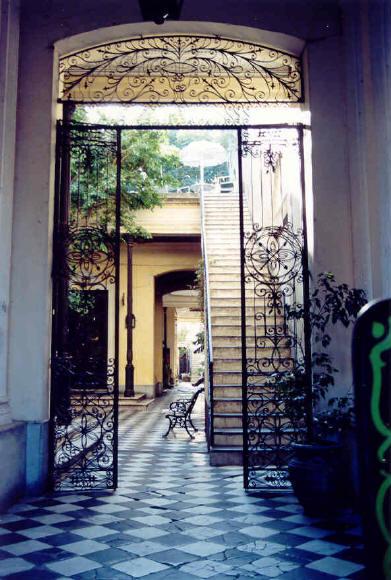
 As we continue southwards we visit the house where Viceroy Liniers lived (he was considered a hero in 1807 when he defeated the British and executed as a traitor when he opposed the declaration of independence from Spain). We learn about early architecture in the colonies and its evollution, and start visiting the many wonders San Telmo has to offer: fascinating houses, antique stores, the old indoors market, the outdoors one (Plaza Dorrego) where Independence was sworn, and the chuch that gave origin to the neighbourhood's name.
 The neighborhood of La Boca is a spot that every Buenos Aires traveler should experience. There is a reason that so many tourists make La Boca a priority on their itinerary, and once you are there you will soon be overwhelmed by its charm and understand exactly why.
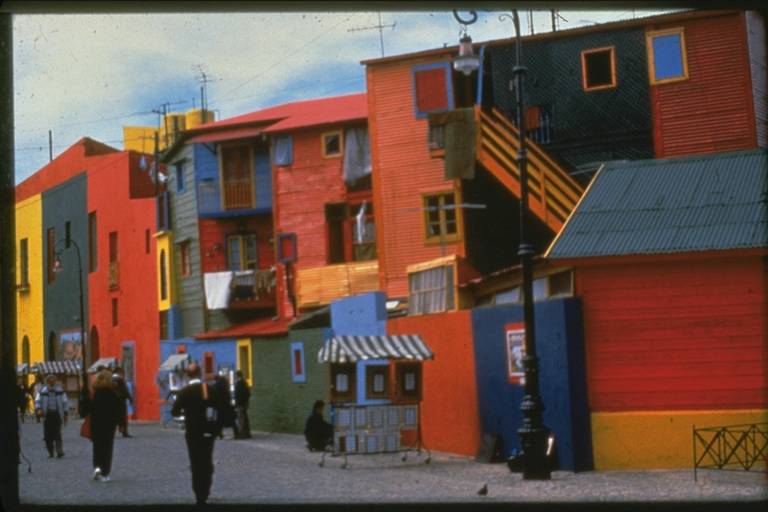 Caminito is the main street of the area that is typically full of color, tango dancers, artists, and tourists with an excited trigger finger on their camera. The local artists spread their works of art across the streets to fill the lively outdoor market with displays and all kinds of fun. Each small door you pass opens up to an exciting world inside that offers every type of souvenir imaginable. On the weekends there is also the Feria de la Ribera, an arts and crafts market, set up outside.
 |
Click this  button to book this tour button to book this tour
www.BA-Walking-Tours.com Tel. +54 (911) 5773-1001 (if calling from overseas) Tel. (15) 5773-1001 (if calling locally from within Buenos Aires) |